
A jigsaw has more parts than just the pieces. The System Picture Framework is a way of seeing past what’s right in front of you. It changes what you notice when you look at a system you’re already part of, and what you can build once you see it whole.
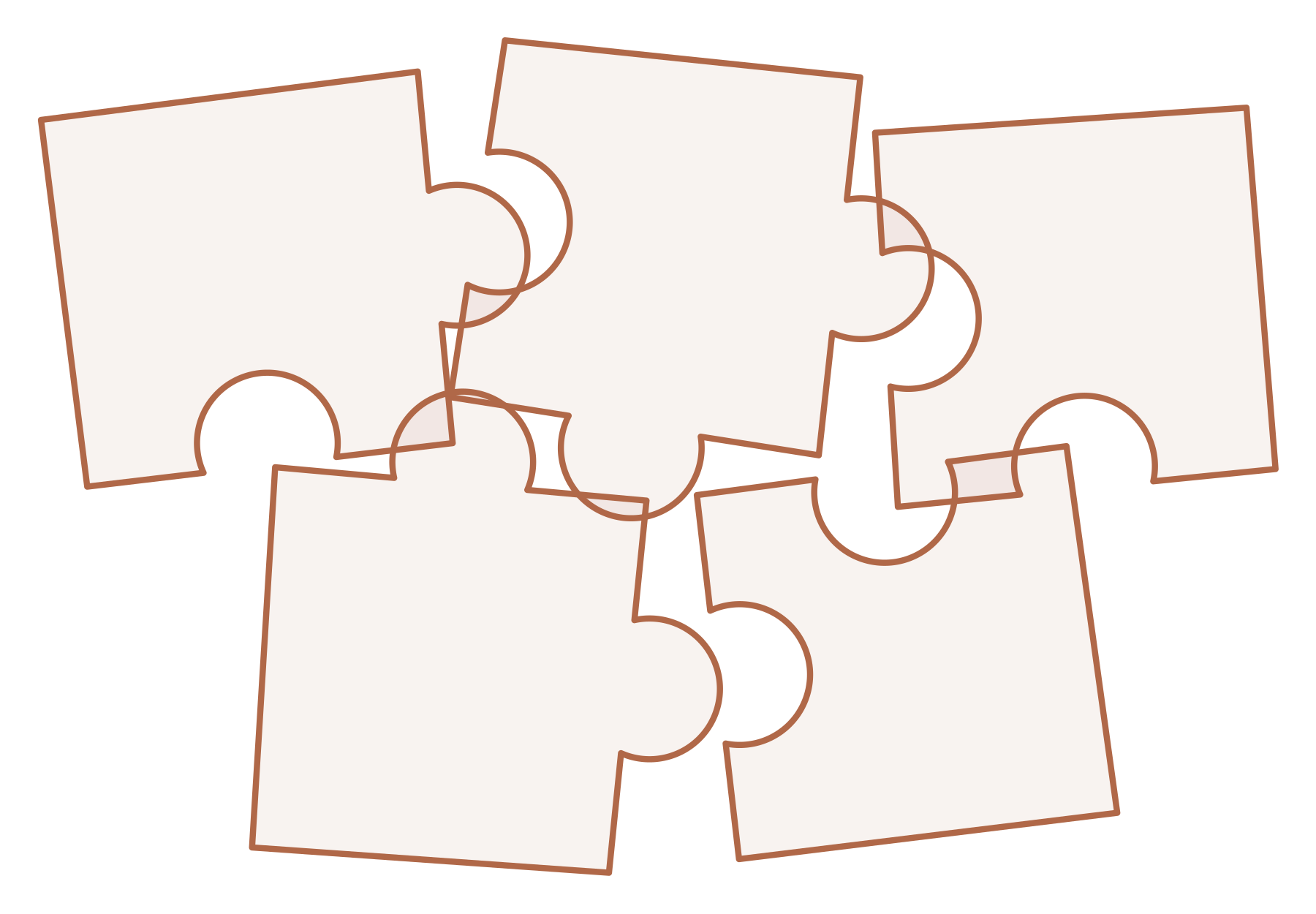
The System Picture Framework
Why this framework exists
I've spent years watching families and professionals do everything right, and still hit a wall. The system around them was never built to bend.
I've lived this myself. Our son needed something a mainstream classroom couldn't give him, and for a long time nobody could tell us why, or what to do about it. The system was focused on the wrong things, and there wasn't room in it to ask a different question.
That's what The System Picture Framework is for. It's a way to step back from the process and ask what's actually needed, for this person, in this system, right now.

The System Picture Framework has five elements, and each one needs the others to make a complete picture - I use a jigsaw to picture how they fit together.
This is the shape of it
The Pieces
Organisations, services and people, each with their own strengths and reach. No single piece is the whole picture.
Inside every piece: the middle is what you deliver and distinctly hold, the edges are where your role ends, the tabs are what you reach out with, the blanks are what you need from others.
The Box
The picture on the lid, the shared vision of what you're building towards, together. Without it, everyone works hard towards slightly different pictures.
The Instructions
"The ways of working: referral routes, information sharing, decision points, review. Agreed and written down, not assumed.
The Conditions
Trust. Relationships. Shared language. Psychological safety. The flat surface and the right light, shaped by leadership, and by power.
'You can't build a puzzle in the dark.’
The Base
The lived and living experience of children, young people, families and adults. Not a piece, the ground the whole picture rests on. It is where the truth of the system lives.
The picture is always forming. In a jigsaw, there is a finished picture. In a system, there never is. Aim for the picture, expect it to keep forming
Use in practice
Knowing the five elements is one thing. Using them is another. This is where each one gets a closer look: what it actually means day to day, a nuance worth watching for, and a few questions to ask of your own system

The Pieces
Explanation: Every organisation, team or person in a system is a piece, distinct and irreplaceable. Knowing yours means being clear on four things: your middle (what you actually deliver, reliably and well), your edges (where your role ends), your tabs (what you actively offer others) and your blanks (what you genuinely need from others).
Things to consider: Your edges can be firm, often set for you by commissioners or funding, and that's fine, but it's still your responsibility to make sure that when someone reaches your edge, they're connected on to a piece that can actually help them, not just turned away. There's also a difference between reaching your tabs out to connect with others, and being quietly stretched to cover a gap that isn't really yours to hold. The first is good partnership, the second just makes the gap invisible while the piece doing the stretching wears thin.
Checklist:
Your middle: what do you deliver, reliably, that this system would miss if you stopped?
Your tabs: when you reach out to another piece, is that genuine partnership, or are you quietly stretched to cover a gap that isn't really yours to hold?
Your blanks: are you honest about what you need from others, or do you tend to manage without and hope nobody notices?
Your edges (or your boundaries, whichever word fits): do you know where they actually are, and is there a genuine connection on the other side of them?
Is there a gap here that nobody else is holding? Think about age range, wider demographics, geography, or any group who might be falling outside everyone's edges at once.

The Box
Explanation: The box is the shared vision, what everyone in the system is building towards together. Not a strategy document or a mission statement, a living, shared understanding.
Things to consider: Watch for the "false box", everyone agrees the same words but means different things by them. It feels like alignment while the real differences get ignored.
Checklist: Whose box is it, really? It might be the vision the people who are going to use services. It might be the box your commissioners have set. It might be your organisation's mission statement. It might be the wider system vision, sitting inside someone's strategy.
The honest answer is probably all of these, at once. That's the reality of working in a system. The real work is making the picture coherent across all of them, and understanding how your own piece fits inside it.
If everyone in your partnership wrote down what you're building towards, would the sentences actually match?
How old is the strategy behind that vision, for your organisation and for the system as a whole?

The Instructions
Explanation: The shared ways of working: referral pathways, information sharing, decision-making, review. Agreed and written down rather than assumed.
Things to consider: Most partnerships have instructions somewhere, in a folder, on a shared drive nobody opens. The real question isn't whether they exist, it's whether they're what people actually reach for when they're unsure what to do.
Checklist: Does everybody actually understand the instructions, or do some people nod along without being sure?
Where are your instructions genuinely agreed, and where are they just assumed?
When a decision is contested, is it clear whose call it is?
Is safeguarding built into these instructions, or does it depend on who's paying attention?

The Conditions
Explanation: Trust, relationships, shared language, psychological safety and trauma-informed practice, the things that let people connect honestly rather than just sit next to each other
Things to consider: Conditions don't create themselves. Someone has to make it safe to be honest and protect the time for it, that's leadership. The pieces round any table are never equal in power, funding or proximity to decisions. Left unnamed, that shapes whose vision ends up in the box and who feels safe to speak.
Checklist: Where are the conditions strongest in your system, and where are they missing?
Who sets the tone here? If you don't agree with the conditions as they stand, how do you influence them?
Do you feel empowered to create the conditions that are missing, or does that feel like someone else's job?
Is there room for people here to bring their whole selves to the work, including their own lived and living experience, or only the professional version of themselves?

The Base
Explanation: The lived and living experience of children, young people, families and adults. Not a piece or a stakeholder to consult, the ground the whole picture rests on.
Things to consider: The test isn't whether people with lived experience are in the room. It's whether their experience shaped the picture before it was decided, not afterwards.
Checklist: Whose experience genuinely shaped this decision, and whose was only asked to respond to one already made?
How is the voice of lived and living experience validated and valued here, at the level of a single service and across the system as a whole? Is that voice paid for its time, the same as any other expertise in the room?
Reading about the five elements is one way in. Working through them with facilitation is another.
I run a taster session for a first proper look at the framework in practice, and a fuller three half-day programme for going deeper into applying it across a whole system.
Seen from where you sit
The five elements look different depending on where you sit in a system. Here's what curiosity about your own picture might look like from five common seats at the table
If you're a service provider
You're closest to your own edges, and to what the base, lived and living experience, is actually telling you. The question is whether that reaches the people setting the box and the instructions, or stops with you.
Do you know where your edges are, and is there a genuine connection on the other side of them when someone reaches one?
Do the instructions handed down to you reflect how the work actually happens, or how someone assumed it would?
If you're a strategic lead
You often hold the box for the whole system, so the question isn't just whether you have a vision, it's whether it's genuinely shared, recognised in the same words by the people actually delivering it.
Do your instructions get used, or worked around because they don't match how referrals and decisions actually happen day to day?
Are you creating conditions where honesty is safe, including honesty that reflects on decisions you've made yourself?
If you're a commissioner
You shape the box more than almost anyone else, through what you fund and what you ask for in return. It's worth asking whether the box you're funding is one the people delivering it actually recognise.
Are your instructions realistic for the pieces working under them, or written for a system that looks tidier on paper than it does in practice?
Do the conditions you create make it safe for a provider to tell you something isn't working, or does raising a problem feel like risking the contract?
If you're a trustee or board member
You hold the box at the furthest distance of anyone here, the organisation's purpose, without living inside the day-to-day work. It's worth asking whether the box you're governing is still the one shaping decisions on the ground, or one that's quietly drifted from what people are actually doing.
Do you know the edges and blanks of the organisation you govern well enough to know what it can't do alone, or does that stay below board level?
Do the instructions and policies you approve actually reach the people using them, or do they stop at the parts of the organisation closest to you?
Are the conditions in the organisation something you can see for yourself, or only what's reported up to you? What would you need to hear to know the culture in the room matches the culture on paper?
How do you know the people with lived and living experience of your organisation's work would recognise the box you're governing on their behalf?
If you're a person with lived or living experience
Your seat at this table is different from the others. You're not applying a framework to a role, you're the ground the whole picture is meant to rest on.
Do you recognise yourself in the vision this system says it's building towards, or does it sound like something written about you rather than with you?
When you've tried to raise something, was there a clear, workable way to do that, or did you have to find one yourself?
Does your voice carry the same weight as the professionals in the room, in practice, not just in principle?
If you named a gap nobody else is holding, based on what you've lived through, would there be somewhere for that to go? And is your time and expertise valued the same way as any other expertise at the table, including being paid for it?
These seats aren't five separate people. You might hold one professionally and another personally, in the same room, at the same time. A commissioner, strategic lead, service provider or trustee with their own lived or living experience is holding two seats at once, and both are worth sitting with.
Five different seats, one picture between them. None of these questions has a single right answer. The point is asking them, together, rather than assuming everyone else already sees what you see.
Apply to your system
Reading and reflecting is a good start. Most people get more from working through the framework with someone else in the room, testing it against a system they actually know rather than an abstract one. Here's how that can work
Working at any level
The framework works at three levels. Inside a single organisation, looking at how your own teams or services fit together. One organisation's place in the wider system it sits inside. Or the whole system itself, a full partnership working out how its pieces connect.
Whichever level you're working at, the same five elements apply, and the routes below can flex to match it.

The taster
A two-hour introduction to the five elements, worked through against a system you already know. It's aimed at leaders, practitioners and managers working in partnerships, multi-agency settings, or the community and voluntary sector. Delivered online or in person, it's an easy way for anyone considering the full programme - your own team, a partner, a stakeholder - to get a first proper look before committing to more. It's the fastest way to see the framework land against something real, and the natural starting point if you're not yet sure the full programme is right for you.
Pieces to Picture: the full programme
Understanding the Puzzle, Building the Picture, Applying the Picture. Three half days, each building on the last.
I deliver this face to face wherever possible. The trust and honest conversation the framework depends on, especially in Conditions and Base, works better in a room together than over a screen.
The first half day works through the five elements themselves, in depth. The second brings them together against your own system, not a hypothetical one. The third is where it becomes a working tool: you leave with your own map of the system, built through the programme rather than handed to you.


Beyond the workshop
Not everyone needs the full programme to get value from the framework. I also review existing strategies through the lens of the five elements - often the gap isn't the plan itself, it's the box, the instructions or the conditions underneath it. And I help turn what a system's learned, whether from a workshop or a review, into whatever it needs to move forward: a theory of change, if the logic of the change itself needs setting out; a programme plan, if it's the delivery that needs shape; or a straightforward action plan, if what's needed is simply who does what, and by when.
These sit either side of the workshop: a strategy review beforehand, to see where you're actually starting from, or a theory of change, programme plan or action plan afterwards, so the learning doesn't stay in the room.
If any of this sounds like the right next step, get in touch.
Hearing it from others
"I found the five elements can be used for the 'internal' organisational system as much as for the external partnerships system... I now have a better appreciation of how detrimental that can be for the wider system."
— Workshop participant
"That we can have confidence about our 'edges' and spaces and still be values aligned when this is encouragement for reaching out to others."
— Workshop participant
"Everyone had a piece, no-one had the full picture."
— Workshop participant
"No single intervention is the answer on its own... we need to be able to see what others' pieces are, how they fit together, which pieces are missing."
— Workshop participant